
Our climate work is based on emission reduction targets approved by the Science Based Targets initiative (SBTi) and on monitoring climate emissions across our value chains. We aim to reduce emissions consistently both in our own operations and throughout our value chains in cooperation with our supplier partners.
Science-based climate targets and emissions reductions
We have set targets approved by the Science Based Targets initiative (SBTi) to reduce our greenhouse gas emissions. By the end of 2030, compared to the 2022 base year, we are committed to reducing:
– absolute scope 1 and 2 greenhouse gas emissions by 42%.
– scope 3 greenhouse gas emissions by 51.6% in relation to value added (EUR million).
The target boundaries include soil-related emissions and removals of bioenergy feedstocks.
In 2025, Marimekko’s scope 1 and 2 emissions increased by 26% compared to the base year. The main reason for the increase was the high emission intensity of refrigerants replaced during maintenance of the cooling system at the Herttoniemi office and the restaurant operating in connection with it.
Scope 3 emissions in relation to value added, in turn, decreased by 21% from the base year. The most significant contributors to this positive development were purchases of less emission-intensive textile materials in line with our material strategy and lower emissions from business travel.
Marimekko’s greenhouse gas emissions and carbon footprint
To advance our climate work based on data, we have calculated greenhouse gas emissions across our entire value chain in line with the Greenhouse Gas Protocol standards since 2019. In 2025, Marimekko’s greenhouse gas emissions were 48,694 tCO2e. Less than 1% of emissions arise from our own operations (scope 1 and 2), while more than 99% are indirect value chain emissions (scope 3). A more detailed breakdown of value chain emissions is shown in the figure below.
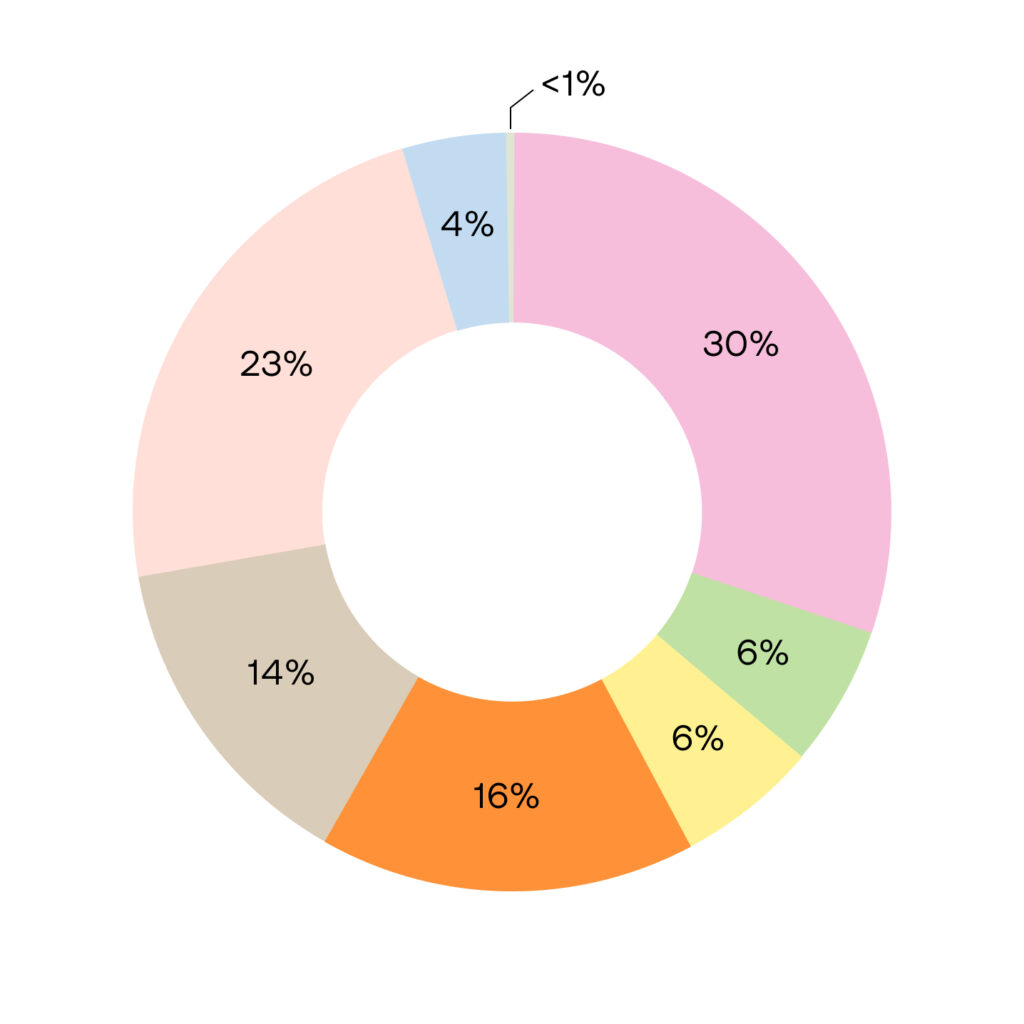
Scope 1 and 2: Less than 1% / Own operations (our own facilities and vehicles (scope 1) and indirect emissions from purchased energy (scope 2))
Scope 3: More than 99% /Purchased textile materials 30%, manufacturing of textile products 6%, purchased ceramics and glass products and their manufacturing 6%, other purchased products and services 16%, transportation and distribution 14%, use of sold products 23%, others such as business travel and waste 4%
Marimekko’s climate transition plan and emissions reduction actions
We have prepared a climate transition plan as part of setting our science-based targets. Our transition plan includes concrete actions such as product material choices, logistics optimization and the transition to renewable energy.
Actions to reduce emissions from our own operations (scope 1 and 2) relate to transitioning to renewable energy, for example by switching our own electricity contracts to renewable electricity globally. Scope 3 emission reductions include continuing the material transition, optimizing our logistics routes and supporting our contract manufacturers in the energy transition.
Product use, care and the role of consumers
A significant share of the greenhouse gas emissions generated over the life cycle of a long-lasting garment comes from care, such as washing, drying and ironing. However, our scope 3 target does not include emissions from product use because measuring these emissions is imprecise. It is important to us that our products last a long time in use, which means more washing and maintenance than for a product that is replaced more quickly with a new one.
We want to support consumers in reducing emissions from product use. That is why we aim to improve the careability and repairability of our products, provide our customers with material-specific care instructions in our care guide and expand the range of lifecycle services we offer.
Progress in climate action and emissions reductions
Even before our current science-based emission reduction targets, Marimekko had been doing climate work in a determined way. Here are some highlights from the sustainability strategy period ending in 2025, during which we achieved – and exceeded – nearly all of our environmental impact targets:
- Greenhouse gas emissions from our own operations (scope 1 and 2) were already 61% lower in 2025 than in 2019 (target -40%). This achievement was based in particular on the transition to renewable energy at our headquarters and textile printing factory.
- The emission intensity of textile materials per sourced kilogram decreased in line with our target and was in 2025 a total of 21% lower than in the 2019 comparison year (target -20%). The value describing water scarcity related to textile materials also decreased in line with our target, falling 84% from the 2019 level (target -50%).
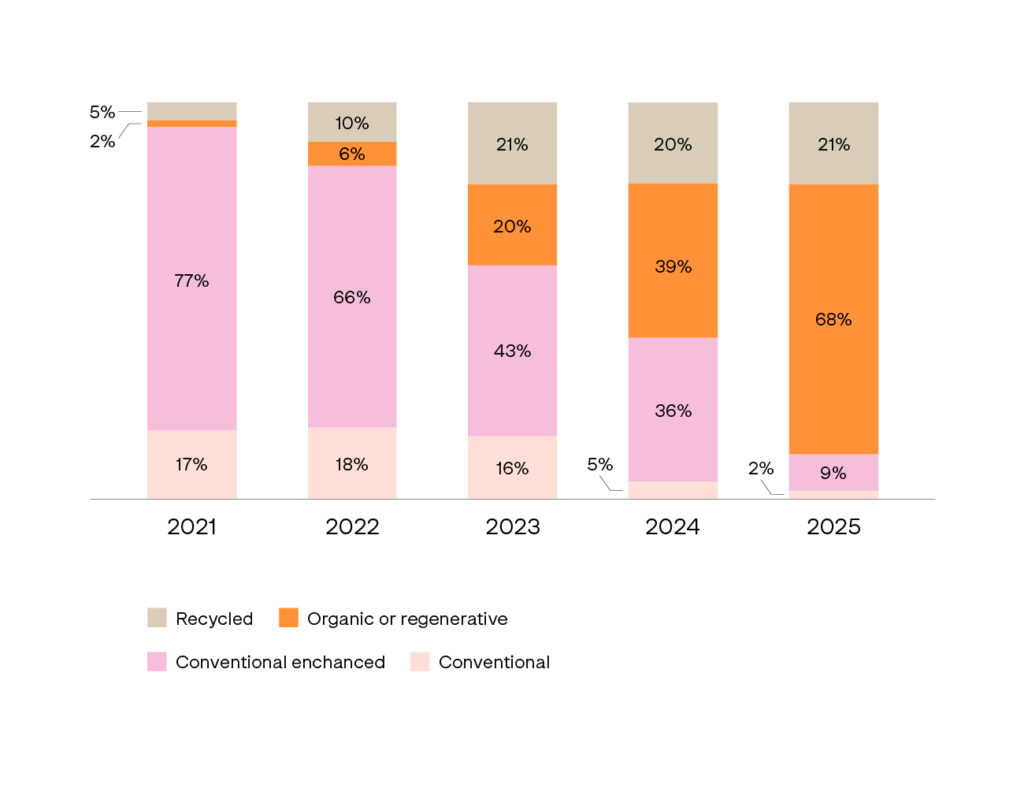
Behind these achievements is determined work to increase the share of less emission-intensive materials in our sourcing in line with our material strategy. When we began this work in 2021, organic and recycled fibers accounted for 7% of our textiles. By 2025, this share had grown to an impressive 89%.
We had also set a target to reduce the emissions intensity of logistics by 50%. By the end of 2025, however, we had achieved only a 5% reduction. The main reasons for the smaller-than-targeted decrease in logistics emissions intensity were the increased share of air freight in the company’s transportation in order to minimize the effects of supply chain disruptions.